





PRODUCE
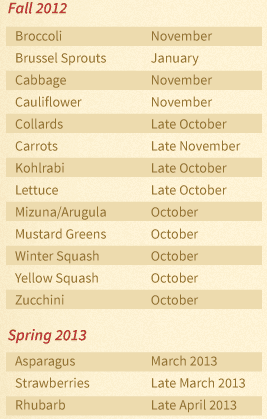
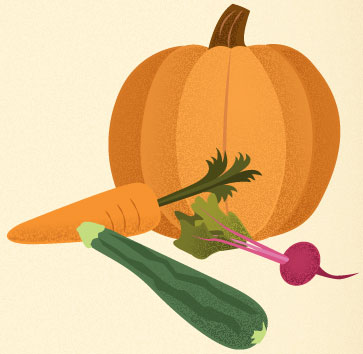

Pumpkin
Pumpkins are believed to have originated in North America. Seeds from related plants have been found in Mexico dating back to 7000 to 5500 B.C. References to pumpkins date back many centuries. The name pumpkin originated from the Greek word for "large melon" which is "pepon." "Pepon" was changed by the French into "pompon." The English changed "pompon" to "Pumpion." American colonists changed "pumpion" into "pumpkin."
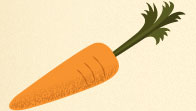
Carrot
In the 16th century, Dutch carrot growers invented the orange carrot in honor of the House of Orange, the Dutch Royal Family. They did this by cross breeding pale yellow carrots with red carrots. Newly orange, carrots traveled England with Dutch travelers during the reign of Queen Elizabeth I. Carrots ranked as the seventh most valuable crop produced in the United States.
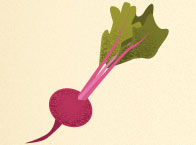
Beet
Are colorful root vegetables containing powerful nutrient compounds that help protect against heart disease, birth defects and certain cancers, especially colon cancer. The greens attached to the beet roots are delicious and can be prepared like spinach or Swiss chard. They are incredibly rich in nutrients, concentrated in vitamins and minerals as well as carotenoids such as beta-carotene and lutein/zeaxanthin.
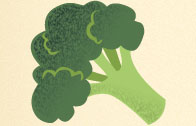
Broccoli
One of the most healthful and common vegetables in the U.S. Broccoli is a close relative of the cauliflower and grows wild in the Mediterranean. The history of this vegetable only dates back to the 1920's in the U.S. A very versatile vegetable that can be steamed, pureed, stir fried or eaten raw.

Zucchini
Zucchinis were the quintessential Italian summer vegetable: Tiny, flavorful baby zucchini and their flowers would appear in the markets in mid-spring, to be joined by larger zucchini by early summer, and all three remained a fixture of the Italian table throughout the rest of the summer months.
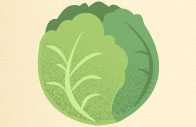
Cabbage
Cabbage is a hardy vegetable that grows especially well in fertile soils. There are various shades of green available, as well as red or purple types. Head shape varies from the standard round to flattened or pointed. Most varieties have smooth leaves, but the Savoy types have crinkly textured leaves.
* All vegetable descriptions taken from The Farm. Please visit to find more information and recipes.